
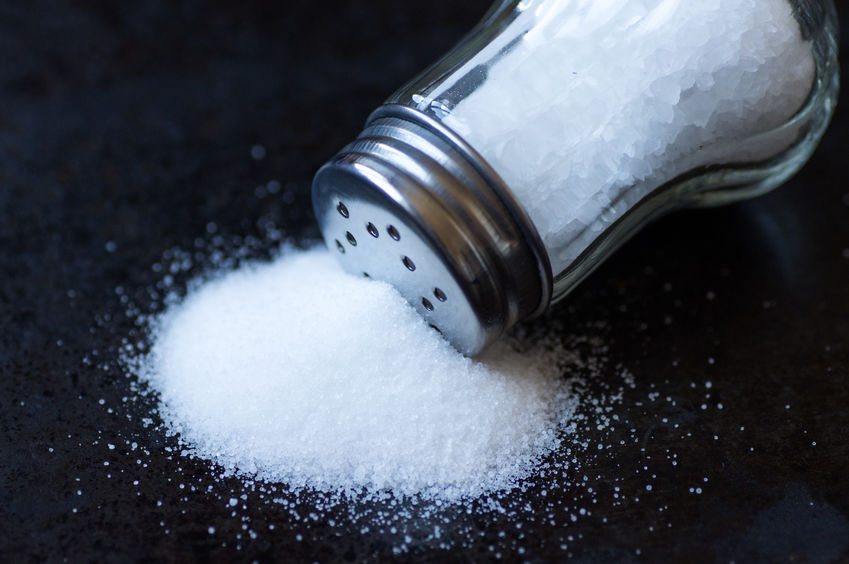
Salt is a crystalline substance composed of sodium chloride (NaCl). It is generally white and is obtained through the evaporation of seawater. It can also be found in the ground in the form of large blocks. Therefore, we can say there are two types of salt: that of marine origin and that of mineral origin.
Salt is essential for flavoring bread; without it, bread would be bland. It also helps control volume and improve color. It is generally used at a ratio of 2% of the flour's weight.
Excess salt reduces volume and slows fermentation, resulting in bread that is overly salty and too dark in color.
For high-hydration breads, the salt calculation is based on the water rather than the flour. In this case, the salt dosage is 33 grams per liter of water.
FUNCTIONS OF SALT IN BREAD
Salt has a significant influence on the bread-making process, depending on when it is incorporated into the dough.
If salt is added at the beginning of kneading, the resulting loaves have less volume and a thicker crust. This yields good results when working with weak flours.
Conversely, if salt is added at the end of kneading, the loaves have greater volume and thinner crusts (though they tend to go stale or lose crispness more quickly). This approach is advisable when using strong flours.
The effects of salt on bread are as follows:
-
- Strengthens gluten: Salt affects the formation of the gluten network, increasing its strength and tenacity. A lack of salt results in softer, stickier doughs. Salt increases the dough's firmness and manageability.
- Increases water absorption: Salt helps gluten absorb more water, allowing for the creation of doughs with higher hydration percentages.
- Inhibits yeast activity: Salt tends to reduce yeast activity, and in excess, it can halt it completely. For long fermentations, a little extra salt is often added to restrict yeast activity during the initial hours.
- It inhibits acid-producing bacteria: Thanks to its antiseptic properties, salt reduces yeast-related acidity. It slows down lactic and butyric acid fermentation. It also slightly curbs proteolytic activity, which can help improve flours prone to excessive degradation.
- It has an antioxidant effect: When added at the end of the mixing process, increased oxidation occurs, resulting in a whiter crumb and a milder flavor.
- It produces a thinner, crispier crust: Salt encourages the crust to develop more color during baking, which results in a thinner crust. Salt-free breads tend to look paler.
- It enhances flavor: Along with the reactions that occur during fermentation and baking, salt improves the bread's taste and aroma.
- It aids in preservation: Salt helps the crumb retain moisture better, thereby extending the bread's shelf life. However, in humid climates, this can be counterproductive, as it may cause the bread to become leathery.