
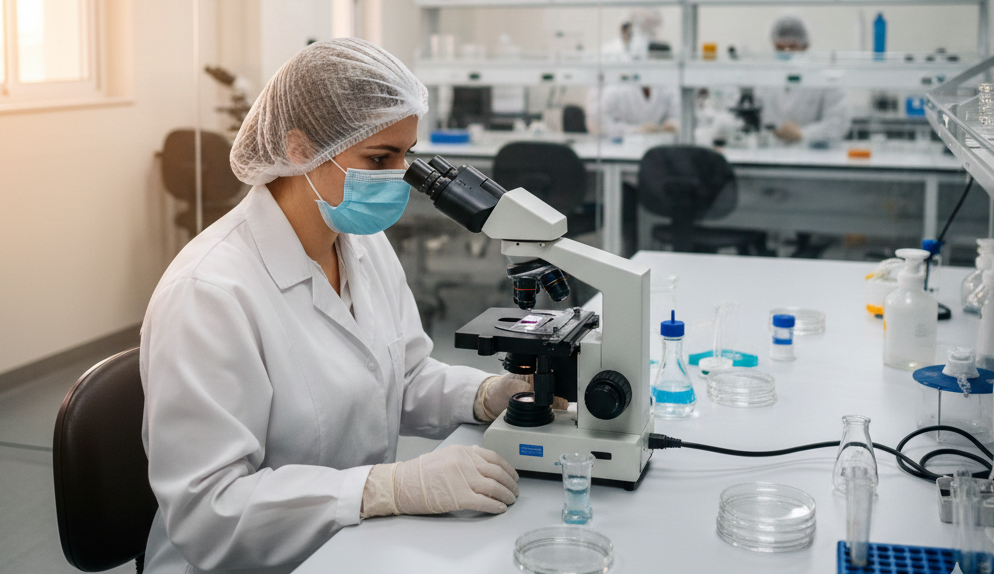
Enzymes are a group of proteins responsible for catalyzing (triggering, accelerating, modifying, slowing down, or even halting) various chemical reactions, provided those reactions are thermodynamically feasible. In other words, they act as regulatory substances within living organisms, generally by lowering the initial energy required to initiate the reaction.
Enzymes are essential for life and catalyze over 4,000 known chemical reactions—provided that conditions regarding pH, temperature, and/or chemical concentration remain stable—since, being proteins, they can denature and lose their effectiveness.
Today, enzymes are widely known and utilized across various industries, including food production, chemicals, agriculture, and petroleum.
HOW ENZYMES WORK
Enzymes can operate in various ways, but they primarily function by lowering the activation energy of a specific chemical reaction, thereby facilitating the process.
The main modes of action include:
- CREATING THE ENVIRONMENT. Activation energy is reduced, helping the reaction to occur. This is achieved by modifying the chemical properties of the substrate.
- FACILITATING THE TRANSITION. Transition energy is reduced without modifying the substrate itself.
- PROVIDING AN ALTERNATIVE PATHWAY. In this case, enzymes react with the substrate to form a complex that helps bypass certain steps in the reaction pathway, reducing the time required for the reaction to take place.
- INCREASING TEMPERATURE. Within certain limits, enzyme activity can be accelerated by raising energy levels through heat generated by parallel exothermic reactions.
ENZYMES IN STARCH DEGRADATION
Enzymes are active throughout the bread-making process—in every phase—with different enzymes acting at different stages. We can distinguish four basic processes in bread-making:
KNEADING:
In this initial stage, flour, water, and yeast are mixed together. During the kneading process, the primary enzymes acting on the flour's starch are alpha-amylases and beta-amylases. Let us examine how each one functions:
- Alpha-amylases:
- Naturally present in wheat flour and other cereals.
- They attack the alpha-1,4 bonds in the starch's amylose and amylopectin chains.
- They yield maltose, maltodextrin, and dextrins as end products.
- They begin to act the moment the flour is hydrated.
- Their activity is enhanced by the mechanical action and friction of kneading.
- Beta-amylases:
- Also naturally present in wheat flour and other cereals.
- They attack the non-reducing ends of the amylose and amylopectin chains.
- They primarily produce maltose as an end product.
- They begin their activity during kneading, alongside the alpha-amylases.
- They reach peak activity at temperatures between 50°C and 65°C.
- The synergy between these two enzymes during kneading allows for the initial breakdown of starch into simpler sugars, such as maltose. Consequently, when yeast is added, these sugars are available to initiate the fermentation process.
- Although their activity is limited during this initial kneading phase, the amylases continue to act during the subsequent resting and fermentation stages of the dough.
RESTING PERIODS:
During the resting periods between fermentation stages, the yeast consumes the sugars released through the coordinated action of the amylases. This allows the dough to rise by producing CO2, which aerates the dough. Thus, the enzymes ensure a steady supply of fermentable sugars for the yeast while the dough rests, enabling optimal bread development. During the dough resting phase following the initial kneading, the primary enzymes acting on the starch are:
- Alpha-amylases:
- They continue to slowly break down amylose and amylopectin chains.
- They produce increasing amounts of maltose, maltodextrin, and dextrins.
- Beta-amylases:
- They maintain their activity at the ends of the chains.
- They progressively release more maltose.
- In addition to this amylolytic activity, there is the contribution of enzymes produced by the yeast itself:
- Maltases:
- Provided by the yeast (*Saccharomyces*).
- They break down maltose into two glucose molecules.
- Glucose is the sugar that yeast can consume.
- Invertases:
- Also produced by the yeast.
- They break down any sugars present into glucose and fructose.
- They provide additional sources of fermentable sugar.
- Maltases:
FERMENTATION:
As yeast grows and reproduces during fermentation, it requires the sugars released through the combined action of its own enzymes and the amylases found in the flour. The resulting glucose and other monosaccharides are metabolized by the yeast to generate necessary energy, producing CO2, which causes the dough to rise. This enzymatic synergy is key to achieving optimal dough fermentation and obtaining the desired volume, texture, and flavor. During the dough fermentation process, the primary enzymes at work are:
- Alpha-amylases and beta-amylases: They continue to slowly break down residual starch into maltose and other sugars.
- Their activity is enhanced at optimal fermentation temperatures (25 to 30°C).
- Enzymes contributed by the yeast (*Saccharomyces cerevisiae*):
- Maltases:
- They break down the maltose produced by amylases into two glucose molecules.
- Glucose is the sugar that yeast can consume as an energy source.
- Invertases:
- They break down the sucrose present into glucose and fructose.
- Yeast can metabolize these monosaccharides.
- Glucoamylases:
- They can break the α-1,4 and α-1,6 bonds of the remaining amylose and amylopectin.
- They release only glucose molecules as the final product.
- Maltases:
BAKING:
Once temperatures exceed 80–90°C, most enzymes are permanently inactivated. However, during the brief initial baking period, temperature-accelerated enzymatic activity is crucial for providing precursors that result in bread with its highly prized appearance, aroma, and taste. The main enzymes involved in this baking process are:
- Amylases in the flour:
- The alpha-amylases and beta-amylases present in the flour play a brief but important role during the initial stage of baking.
- During the first few minutes of baking, at temperatures around 60–70°C, alpha-amylases become active.
- They rapidly break down residual starch into maltose, maltodextrin, and other dextrins.
- This process provides additional sugars that participate in the Maillard reaction.
- Yeast glucoamylases:
- Also known as fungal amylases.
- They are briefly activated at the start of baking.
- They break alpha-1,4 and alpha-1,6 bonds, releasing only glucose.
- This glucose also participates in the Maillard reaction.
- The Maillard reaction is crucial for developing the crust's characteristic brown color and aroma:
- Reducing sugars, such as glucose, react with the amino groups of amino acids or proteins.
- This produces the brown-colored molecules and aromas typical of a crispy bread crust—qualities that are highly prized.